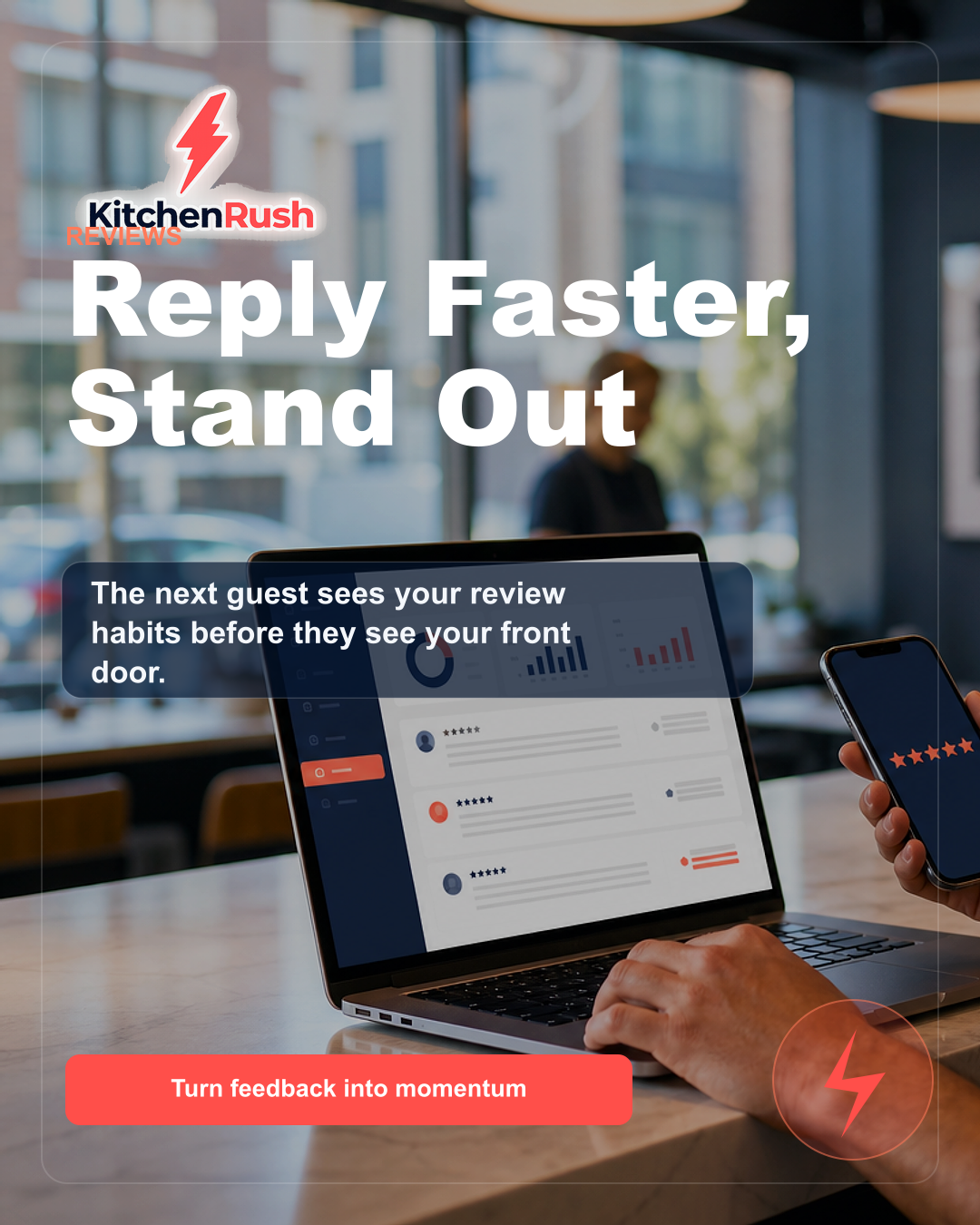


Independent restaurants are not only competing on menu, location, and price anymore. They are competing in the moment before a guest decides where to go: the search result, the map listing, the review stack, and the quick AI-style answer that summarizes options nearby.
That moment is crowded. A guest may search for a place near work, check a short list on maps, skim recent reviews, compare photos, and move on if the profile feels stale. The restaurant with the fastest, most useful public signals often earns the next tap.
This is why review response velocity matters. It is not about chasing perfect ratings or writing long replies. It is about showing that the restaurant is awake, listening, and improving while the guest is still deciding.
Why fresh review activity is a growth signal
Google says local results are influenced by relevance, distance, and prominence, and that prominence can include review count and review score. That does not mean a single reply magically changes ranking. It does mean reviews are part of the public trust layer guests and discovery systems can see.
For restaurant owners, the practical takeaway is simple: reviews should not sit untouched for days. A fast response can help a potential guest understand what happened, what changed, or why regulars keep coming back. It also tells the next reviewer that their words will not disappear into a void.
The rise of AI-assisted search makes this even more important. When summaries pull from public business information, review themes, and local listings, stale or unanswered feedback can become the story. Restaurants need a steady rhythm that keeps their public profile current.
The mistake: treating reviews as customer service only
Most restaurants respond to reviews when there is a problem. A one-star review gets attention because it hurts. A five-star review gets ignored because it feels like the job is done.
That is backwards for local marketing.
Positive reviews are proof. A short reply can reinforce the exact themes you want future guests to notice: fast lunch service, a calm date-night room, a good patio, easy takeout, family-friendly seating, reliable catering, or a standout team member. Negative reviews are also useful when handled well. A measured response shows standards, ownership, and care.
The goal is not to win an argument. The goal is to make the next guest feel safer choosing you.
A 10-minute review desk rhythm
The best review system for an independent restaurant is small enough to survive a busy week. Start with ten minutes, three times a week.
First, scan new reviews by recency. Do not begin with the worst review unless it is urgent. Begin with the newest reviews because they are the freshest public signals.
Second, tag the theme. Use simple labels: service, speed, atmosphere, takeout, value, wait time, staff praise, product quality, or online ordering. Over time, these tags show what the market is actually saying.
Third, reply with one useful sentence and one human detail. A useful reply might thank the guest for mentioning a team member, acknowledge a wait-time issue, or clarify that a process has changed. Avoid generic copy-paste language. Guests can tell.
Fourth, create one follow-up action. If a review praises weekday lunch, post a lunch reminder. If several reviews mention slow pickup, tighten the pickup instructions. If a guest names an employee, pass that praise to the shift lead.
This is where review management becomes operations management.
What a strong reply sounds like
A strong review reply is short, specific, and calm.
For a positive review: thank the guest, echo the detail, and invite the next visit without sounding desperate.
For a critical review: acknowledge the experience, avoid defensiveness, explain the next step if appropriate, and move sensitive details offline.
For a mixed review: thank them for the useful feedback and name the improvement area.
The tone should sound like an owner who cares about the room, not a legal department or a bot.
Turn review themes into weekly content
Reviews are free market research. If multiple guests praise fast takeout, that is a social post. If guests mention a quiet corner for meetings, that is a Google Business Profile update. If families keep praising the staff, that is a community story.
The missed opportunity is leaving those signals trapped inside review platforms.
A simple weekly loop works:
- Pull the top three review themes.
- Choose one operational improvement or proof point.
- Turn it into a local post, short caption, or offer.
- Ask the next best guest for a review while the visit is fresh.
This loop helps restaurants market from real guest language instead of guessing what to say.
How KitchenRush helps
KitchenRush is built for owners who do not have time to open five different dashboards before lunch service. The review workflow belongs next to local posting, offers, social scheduling, and customer follow-up because those pieces influence one another.
When reviews, local search activity, and content planning sit together, the owner can see the pattern faster. A review theme can become a post. A recurring complaint can become an operations note. A strong week of guest praise can become proof for the next campaign.
That is the point: less tab-hopping, more usable momentum.
The weekly operating play
Pick three review windows: Monday morning, Wednesday afternoon, and Friday before the weekend rush. Keep each one short. Reply to the newest reviews, tag the themes, and turn one insight into a public update.
At the end of the week, ask one question: what did guests already tell us to market next?
Independent restaurants do not need a giant reputation department. They need a habit that is fast enough to keep and visible enough to matter.
KitchenRush helps restaurant owners turn reviews, local posts, and guest follow-up into one practical growth rhythm.
FAQs
How quickly should a restaurant respond to reviews?
Aim for the same week, and faster for detailed negative reviews. The goal is to show current attention without creating a workflow the team cannot keep.
Should restaurants respond to positive reviews too?
Yes. Positive reviews are public proof. A short, specific reply reinforces the reasons future guests should trust the restaurant.
Do review replies directly improve Google ranking?
Google does not publish a simple formula for review replies as a ranking lever. Reviews contribute to public prominence and trust, so the practical benefit is better visibility, credibility, and guest confidence.
What should owners avoid in review replies?
Avoid arguments, private details, copy-paste responses, and defensive language. Keep replies calm, specific, and guest-centered.
How can KitchenRush make review management easier?
KitchenRush brings reviews, local posts, social content, and customer follow-up into one workflow so owners can act on guest signals faster.
Visual version