By KitchenRush Editorial
Last updated: June 25, 2026
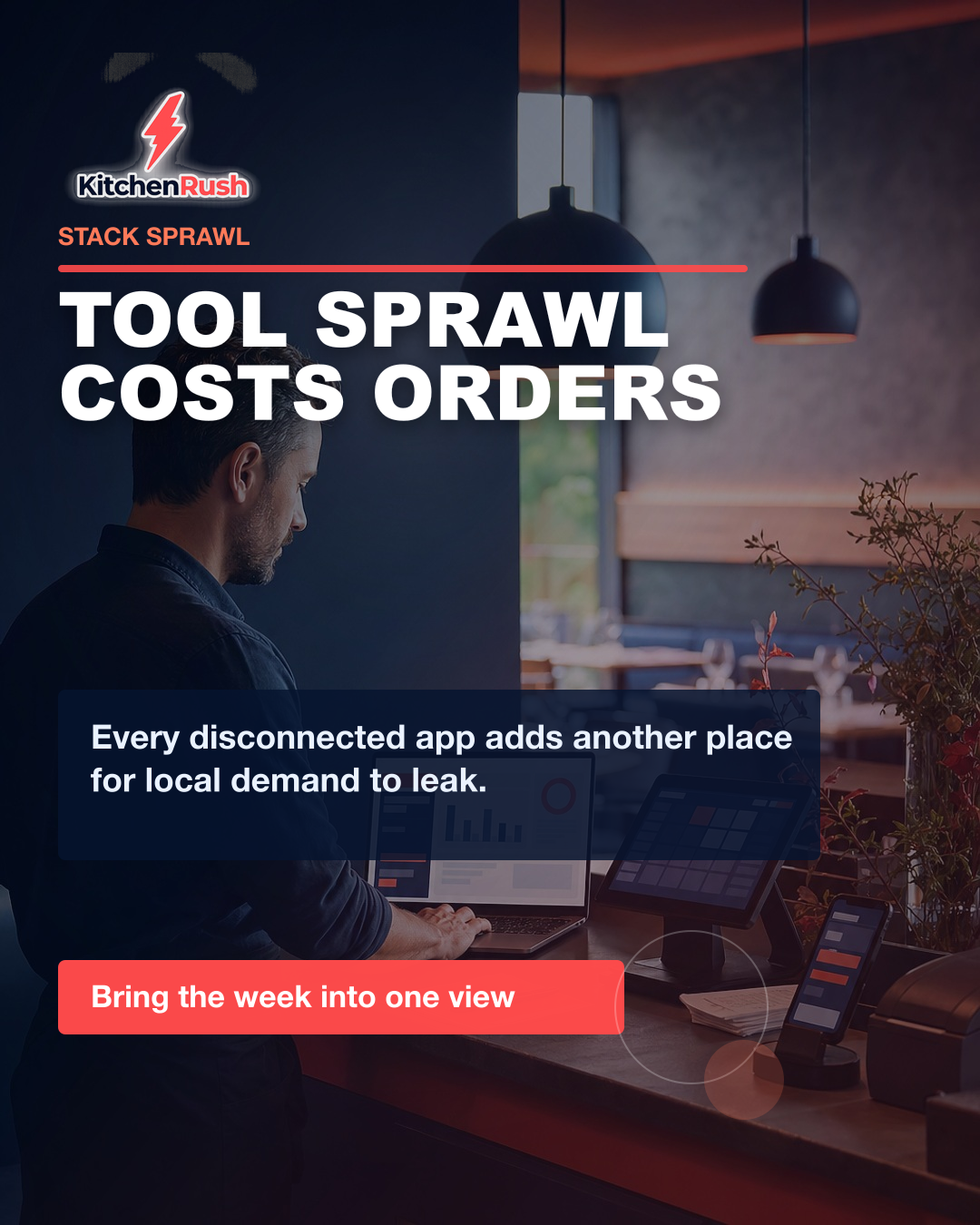
Independent restaurants do not need another dashboard that looks impressive in a demo and becomes one more tab during the rush. They need a calmer way to turn demand into action. That is why tool sprawl has become one of the quietest taxes on local restaurant growth. The bill does not always show up as a single subscription. It shows up as missed replies, stale profile updates, disconnected offers, duplicate posts, weak follow-up, and owners spending their best thinking time stitching together systems that should already be working together.
The 2026 restaurant environment makes that tax harder to ignore. The National Restaurant Association projects $1.55 trillion in U.S. restaurant sales this year, while also noting persistent pressure from uneven traffic, rising costs, and the need for technology that improves efficiency and guest connection. The association's 2026 outlook is optimistic, but it is not easy. Operators are expected to compete for attention while protecting margin and keeping service consistent.
That is the real problem with a scattered marketing stack. Each tool may be reasonable on its own. The social scheduler posts. The review inbox collects feedback. The website takes orders. The email tool sends promotions. The Google Business Profile needs updates. The delivery marketplaces bring first-time guests. The issue is not that any single tool is useless. The issue is that independent owners are forced to operate the gaps between them.
The Hidden Cost Is Context Switching
Restaurant owners already make hundreds of decisions before service begins. What is prepped? Who called out? Which items should be pushed? Which orders are late? Which comments need a reply? Which offer can the team execute without slowing the line? A disconnected stack turns those questions into app switching. That switching drains attention even when nothing breaks.
A better system starts with one operating view. It should show what demand is doing, what customers are asking for, which channels need action, and what the restaurant can promote today without creating operational drag. The owner should not need to log into five places to learn that pickup is moving, reviews mention wait times, the dinner special needs a photo, and a slow lunch window could use a simple direct-order offer.
The best restaurant technology does not make the business feel more technical. It makes the week easier to run.
AI Adoption Raises the Bar
Restaurant technology is not slowing down. Restaurant Dive's coverage of the National Restaurant Association report notes that 26% of operators are already using AI-related tools, with marketing the leading use case: 19% of full-service operators and 15% of limited-service operators said they use AI to assist with marketing. The same coverage also notes that operators see technology as a competitive advantage under cost pressure.
That matters because AI does not fix a scattered foundation by itself. If menu data, offer details, review signals, guest messages, and ordering links live in separate places, AI can only help so much. It may write a caption, summarize a review, or suggest an offer, but the owner still has to decide what is true, what is current, and where the action should go.
Independent restaurants should treat AI as part of the weekly operating loop, not as a novelty. The useful question is not, "Can this tool create content?" The better question is, "Can this system help us decide what to publish, where to publish it, and how to follow up when demand appears?"
The Stack Should Follow the Guest
Guests do not experience the restaurant as separate systems. They search, scroll, compare, order, visit, review, message, and return. If those steps do not connect, the restaurant loses signal. A review that mentions a popular item should inform the next post. A social comment asking about hours should point to the same direct action as the Google listing. A delivery customer should see a reason to come back through an owned channel. A slow lunch window should trigger a practical offer the team can actually handle.
That does not require a large marketing department. It requires a system that respects how restaurants actually work. The owner needs fewer places to check, fewer manual handoffs, and fewer decisions made from stale information.
What a Connected Weekly Loop Looks Like
Start with the week, not the channel. A connected restaurant marketing loop should answer five simple questions before content goes out.
First, what does the restaurant want more of this week: pickup, weekday lunch, private inquiries, repeat visits, reviews, or local search visibility? Second, what can the team execute cleanly without overloading service? Third, what proof already exists in reviews, photos, menu performance, or guest questions? Fourth, which channels should carry the same message: Google, social, email, the website, and direct ordering? Fifth, what follow-up should happen when someone clicks, replies, orders, or leaves feedback?
When those questions live together, marketing becomes less reactive. The owner is no longer posting because a channel feels quiet. The owner is publishing because the business has a specific demand goal and a clear next action.
Where KitchenRush Fits
KitchenRush is built for the owner who cannot afford a separate agency, social media manager, inbox assistant, local SEO specialist, and operations analyst. It brings the restaurant's demand channels into one practical workflow: content planning, profile updates, review awareness, guest communication, direct actions, and publishing.
The point is not to make independent restaurants feel like enterprise chains. The point is to give them the operating leverage that chains take for granted while preserving the local identity that makes the business worth choosing.
When the stack gets simpler, the owner gets time back. When the owner gets time back, the restaurant can respond faster, publish with more confidence, and turn attention into visits instead of admin work.
CTA
KitchenRush helps independent restaurant owners replace scattered marketing work with one connected weekly operating loop. See how KitchenRush can bring social, local search, reviews, guest follow-up, and direct actions into one calmer system.
FAQs
What is restaurant tool sprawl?
Restaurant tool sprawl is the buildup of disconnected apps and dashboards across marketing, ordering, reviews, guest messaging, and local search. It creates extra work because the owner has to manually connect the decisions and follow-up between tools.
Why does tool sprawl hurt independent restaurants?
Independent owners have limited time and small teams. Every extra login can delay replies, create inconsistent offers, weaken follow-up, or make it harder to understand what demand is doing across channels.
Does AI solve restaurant marketing tool sprawl?
AI can help with writing, summarizing, and planning, but it works best when the restaurant's menu, offers, reviews, ordering links, and customer signals are connected. AI layered on top of scattered data still leaves the owner doing too much manual coordination.
What should a restaurant consolidate first?
Start with the demand loop: local search updates, social publishing, reviews, guest questions, direct ordering, and follow-up. These are the places where attention most often turns into revenue or disappears.
How does KitchenRush help?
KitchenRush gives independent restaurants a connected workflow for planning, publishing, responding, and turning local demand into action without relying on a patchwork of separate marketing tools.
Visual version