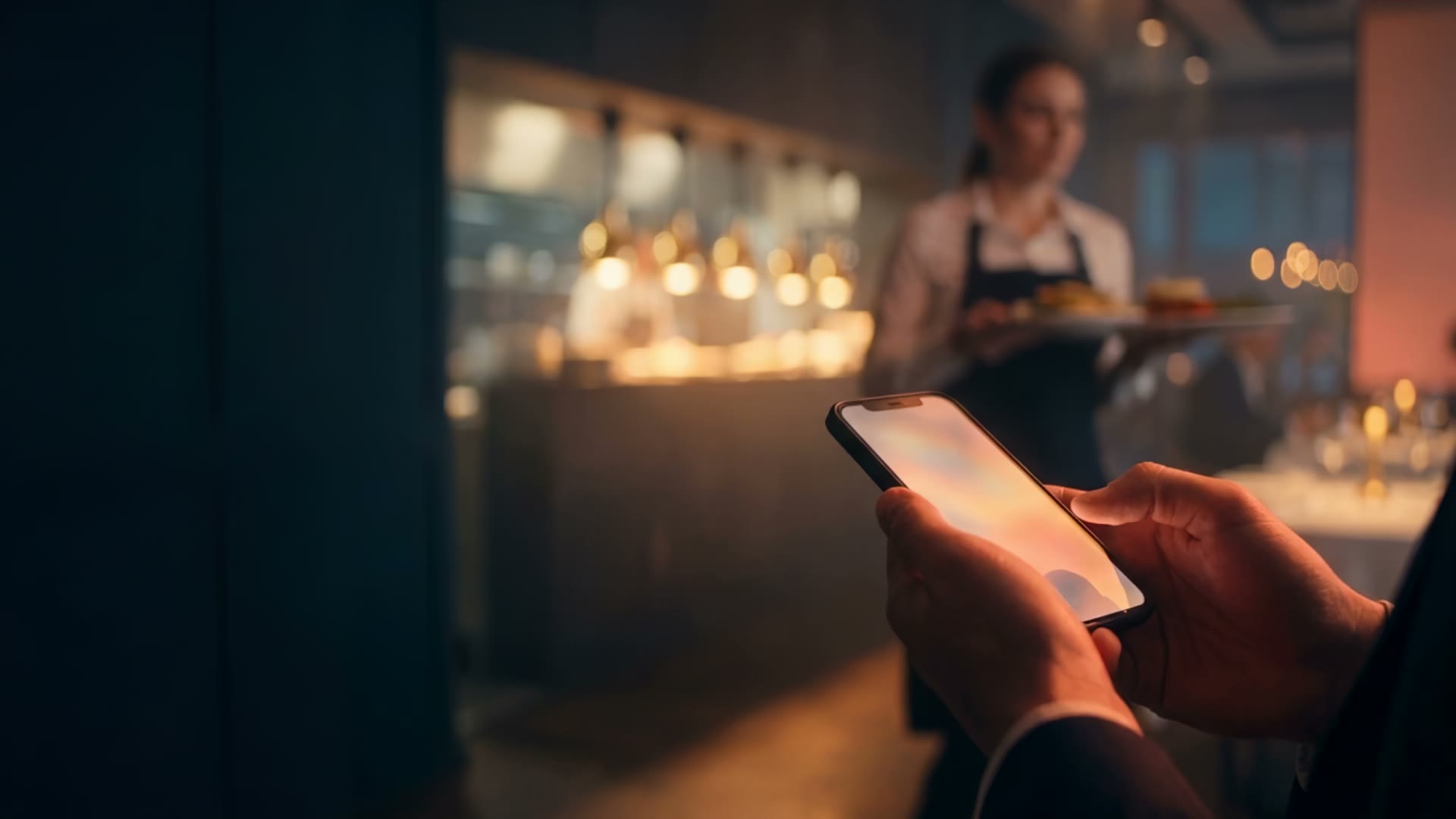
Your First Frame Is the New Front Door
Short-form video is no longer a side project for restaurants. It is one of the first places a guest meets the business before deciding whether to visit, order, save, follow, or ask a friend to try it. The hard part is that the decision often happens before the caption loads.
That makes the first frame the new front door.
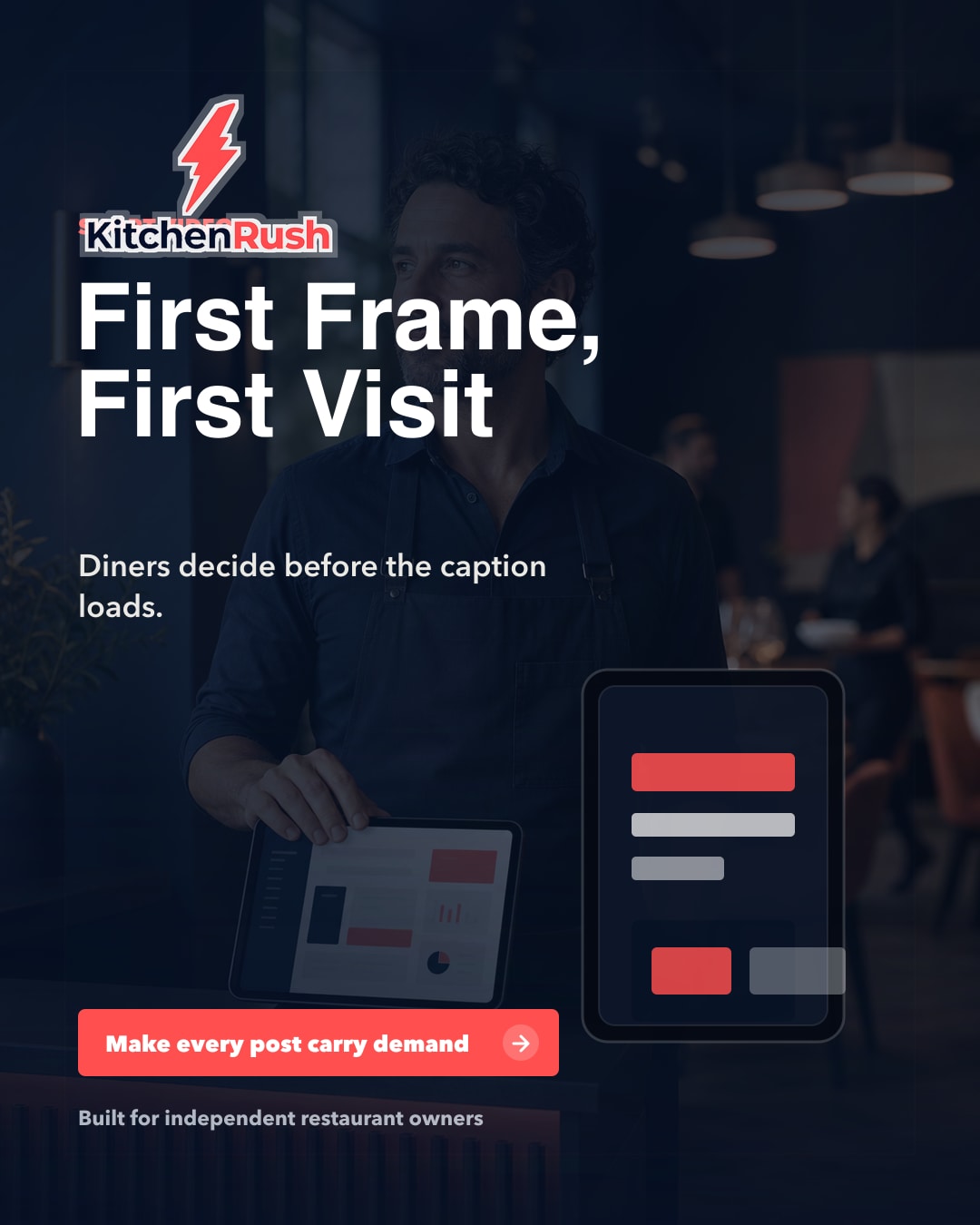
For an independent restaurant, the opening image has to do more than look active. It has to answer a guest's first question quickly: why should I care right now? Is there a special? Is the room lively? Is the dish timely? Is the patio open? Is pickup easy? Is this worth saving for the weekend? If the frame cannot carry that signal by itself, the post depends on a caption most people never reach.
KitchenRush treats short-form video as an operating rhythm, not a random creative assignment. The goal is simple: turn a real restaurant moment into a first frame, post, Google update, short video, and customer touchpoint that all point in the same direction.
Why this matters in 2026
Restaurant content guidance for 2026 keeps moving toward short-form, personality-led, locally relevant publishing. Brew's hospitality content guidance, DirectOrders' restaurant marketing trend coverage, and Toast's restaurant social strategy materials all point to the same reality: restaurants cannot rely on occasional polished posts while customers make faster discovery decisions across Reels, Shorts, TikTok, Google, and local social feeds.
The pressure is sharper for independents. A chain can buy reach and repeat a national offer. An independent needs the weekly proof that the business is alive in the neighborhood. That proof might be a lunch special, a quiet pre-shift prep moment, a patio opening, a review worth highlighting, a catering reminder, or a pickup bundle. The content works when the frame gives the guest enough context to keep watching.
The first-frame test
Before posting a short video, ask four questions:
- Can a guest understand the reason to watch without reading the caption?
- Is the main message visible in the center of the posted feed?
- Is the restaurant's next action obvious?
- Could the same moment become a Google update, customer email, or follow-up post?
If the answer is no, the problem is not the footage. The problem is the frame.
Most restaurant videos fail in predictable ways. The hook is too high on the screen and gets covered by platform chrome. The logo is tiny or in the right-side action rail. The first image is a pretty dining-room shot with no reason to visit. The offer is explained only in the caption. The call to action is placed in the bottom band where captions and navigation cover it.
The result feels unfair because the restaurant may have a strong moment. It just did not package the moment for how people actually consume it.
What a restaurant first frame should include
A useful first frame needs five parts:
- A readable hook that gives the guest a reason to stop.
- A real restaurant visual that proves the business is active.
- A clear offer or context cue that explains why this matters today.
- Brand recognition that helps the guest remember who posted.
- A visible next action that shows what to do next.
That does not mean every frame needs to be crowded. It means every frame needs a job. A short hook, strong image, and one action are usually enough.
The operator problem is not creativity
Most independent owners already know what could become content. The friction is operational.
Someone has to notice the moment, choose the hook, crop for each platform, keep the logo readable, avoid unsafe edges, write the caption, update Google, and keep the post consistent with the week's offer. When those steps live in separate tools, content becomes a task that slips as soon as service gets busy.
That is why short-form video needs a workflow. The restaurant should not start from a blank screen every day. It should start from a weekly demand plan: what are we trying to sell, what proof do we have, what customer question are we answering, and where should that answer appear?
The KitchenRush workflow
KitchenRush helps operators turn one local moment into a repeatable publishing loop:
- Pick the weekly demand signal: offer, event, daypart, review, menu item, pickup habit, or private dining push.
- Create the first frame around the guest decision, not the owner's internal note.
- Keep critical content inside the center of the posted feed.
- Turn the same idea into a carousel, short video, Google update, and customer follow-up.
- Track what should be refreshed next week.
This is not about making restaurants act like influencers. It is about protecting the demand already moving through the neighborhood.
What owners should do this week
Choose one moment that already exists in the restaurant. Do not invent a campaign. Pick something real: a weekday pickup bundle, a review line, a prep moment before dinner, a patio cue, a lunch reminder, or a group-order option.
Then build the opening frame before writing the caption. Put the hook in the center. Keep the logo readable. Show the thing a guest can understand quickly. Make the next action visible. Once the frame works, the caption becomes support instead of rescue.
KitchenRush exists for that operating rhythm: one restaurant moment, turned into the week's local visibility across Google, social, and customer touchpoints.
FAQs
How long should a restaurant short video be?
For most local restaurant posts, 12 to 25 seconds is enough. The opening frame and first two seconds matter more than total length.
Should restaurants post polished videos or real service moments?
Use real service moments, but package them professionally. A live restaurant cue with a clear hook usually beats a generic polished clip with no local reason to visit.
What should go in the first frame?
Use a short hook, recognizable restaurant context, readable brand mark, and one clear next action. Keep critical content away from the top, bottom, and right-side platform controls.
How can an owner keep up with short-form content?
Build from one weekly demand signal instead of starting from scratch. KitchenRush turns that signal into social, Google, and customer touchpoints in one workflow.
CTA
See how KitchenRush helps independent restaurants turn one real moment into a week of local demand.
Sources
Visual version