Train the Rush in 30 Seconds
By KitchenRush Editorial
Last updated: June 30, 2026
A restaurant can train staff quickly before a busy shift by turning one repeat service standard into a 30-second clip, assigning it before pre-shift, and connecting it to the shift note, the guest promise, and the follow-up review. The best microtraining is not a library of long lessons. It is a daily habit that makes one behavior clear before the rush begins.
That matters because the labor story in 2026 is not only about hiring. The National Restaurant Association's 2026 outlook says restaurant employment is expected to reach 15.8M while operators continue to focus on workforce development, technology improvements, and service quality. Owners need training that fits the shift, not training that waits for a quiet month.
Why do short clips work better than another binder?
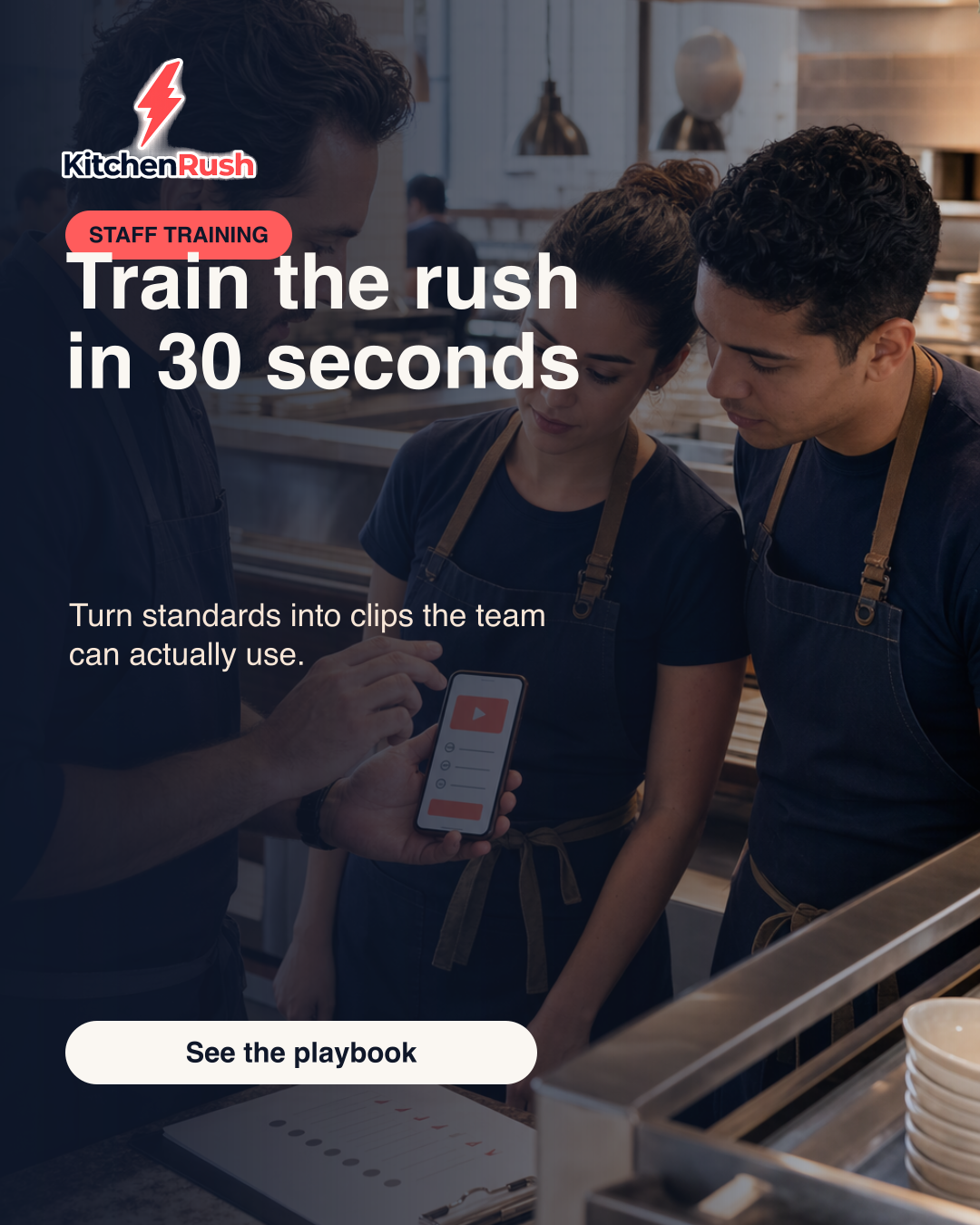
A binder can document the standard, but it rarely changes behavior at 6:43 p.m. when tickets are stacking up. Short clips work because they meet the team at the moment of use. A host can see the greeting. A runner can see the handoff. A cashier can see how to mention the limited item. A new hire can replay the standard without asking a manager to explain it for the tenth time.
The point is not to make training feel like social media. The point is to make it visible, specific, and repeatable. One clip can carry one behavior. That is enough.
What should a 30-second training clip include?
A good pre-shift clip has four parts:
| Part | Example | Why it works |
|---|---|---|
| The standard | "Greet takeout guests within 10 seconds." | The behavior is observable. |
| The reason | "It reduces counter confusion during peak pickup." | The team sees the operational payoff. |
| The example | A short demo from the manager or lead. | The standard is visual, not abstract. |
| The check | "Reply done before lineup." | The owner knows it landed. |
Keep it short enough to watch before a shift and specific enough to change one action. Long lessons belong in onboarding. Microtraining belongs in the daily operating rhythm.
Where should restaurant owners find the next clip idea?
The best clip ideas are already inside the business. Look for the mistake that keeps repeating, the review theme that keeps appearing, the offer guests keep misunderstanding, or the handoff that slows the line.
A weekly review might reveal that guests mention slow pickup. The next clip can show the pickup greeting and handoff. A new menu push might require a 20-second explainer so staff know how to describe it. A local event might require a quick order-flow note before the crowd arrives.
Training becomes more useful when it is connected to the same signals the owner already watches: reviews, orders, offers, staffing, and local demand.
How does technology fit without adding another chore?
Restaurant technology should make the daily rhythm easier. Restaurant Dive's coverage of the NRA outlook noted that operators are using AI for marketing and administrative work, while many plan to invest in technology that improves productivity and guest experience. That is the useful lane for microtraining: summarize the signal, draft the clip prompt, assign the standard, and keep the owner from juggling another disconnected tool.
The technology is not the trainer. The owner and managers still define the standard. The system helps the standard move from a complaint, note, or offer into something the team can act on before service.
What should KitchenRush connect?
Training should not sit apart from marketing. If the restaurant publishes a weekend offer, the team needs to know how to mention it. If reviews mention slow pickup, the shift note should turn that into a training moment. If a high-margin item is being promoted, the person answering questions should know the one-line description.
KitchenRush is designed for that connection. It gives owners a calmer way to run the daily loop: guest signals, team notes, posts, offers, and follow-up in one operating rhythm.
A pre-shift microtraining loop
- Pick one behavior that affects today's guest experience.
- Record or assemble a short clip with the expected standard.
- Assign it to the team before lineup.
- Tie it to the shift note or active offer.
- Review one signal after service: guest feedback, speed, sales, or manager notes.
The result is not perfect training. It is visible progress. For an independent owner, that is the difference between hoping the team remembers and giving the team a clear standard before the rush.
CTA
KitchenRush helps independent restaurant owners connect guest feedback, shift notes, offers, and daily training prompts so the team can protect service consistency without another disconnected dashboard.
FAQs
What is restaurant microtraining?
Restaurant microtraining is a short, focused lesson built around one behavior, such as a greeting, pickup handoff, upsell line, cleaning standard, or guest-recovery step.
How long should a pre-shift training clip be?
Thirty seconds is a useful target. The clip should be short enough to watch before service and specific enough to change one observable action.
What should owners train on first?
Start with the behavior that creates the most friction this week: review complaints, pickup confusion, missed offer explanations, menu questions, or handoff errors.
Can microtraining replace onboarding?
No. Onboarding teaches the role. Microtraining reinforces one standard at a time so the team can improve while the restaurant keeps operating.
How does this improve marketing?
Marketing creates a promise. Training helps the team deliver it. When posts, offers, and service standards stay aligned, guests are more likely to trust the restaurant and return.
Visual version