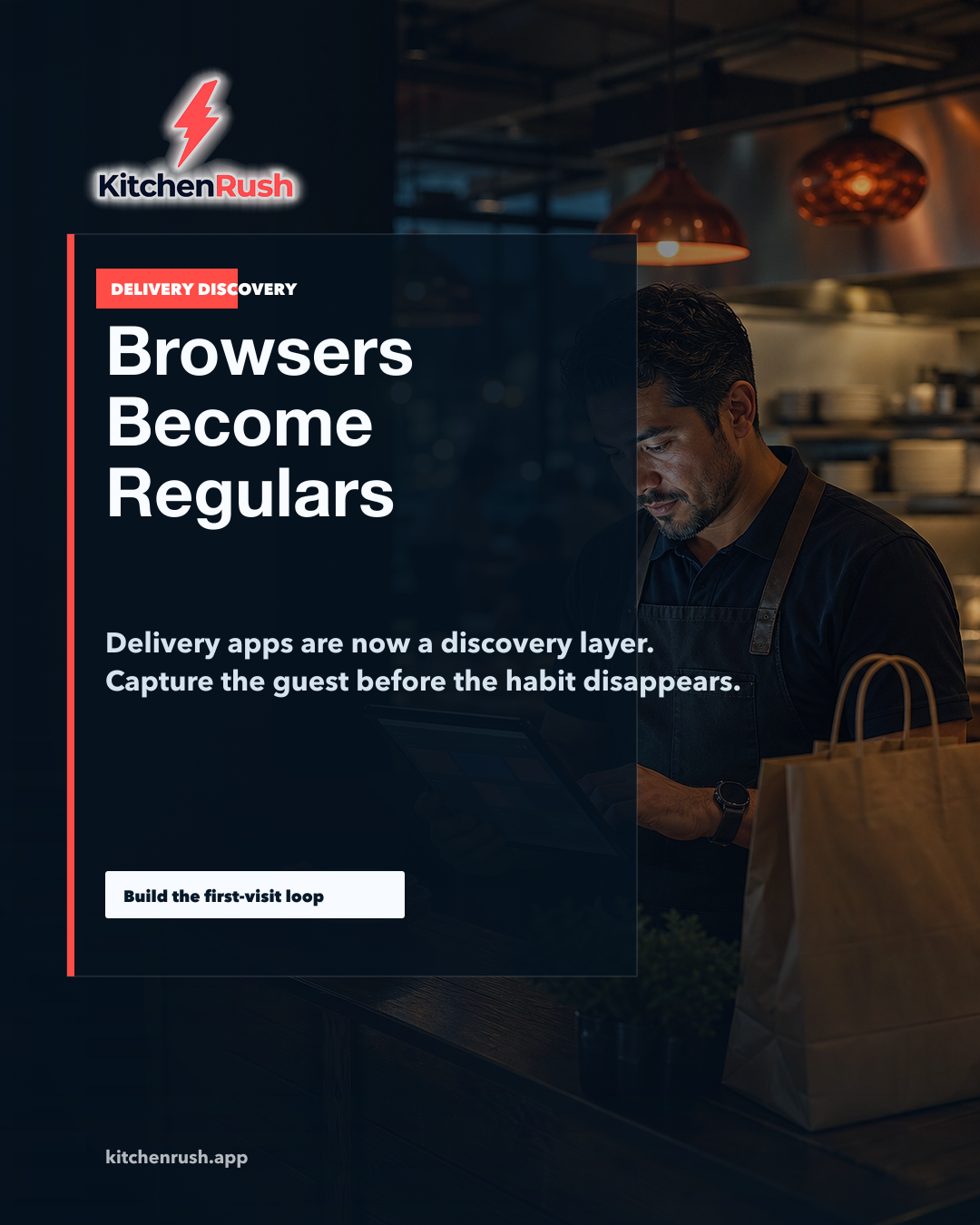
Delivery App Browsers Should Become Regulars
Delivery apps used to feel like a narrow transaction channel: a guest opens the app, chooses a restaurant, places an order, and disappears into a platform-owned relationship. That picture is too small now.
The better way to look at delivery in 2026 is as discovery. A guest may be hungry, tired, commuting home, planning a low-effort weekday meal, or comparing a few restaurants from the couch. They may not have chosen a place yet. They are browsing photos, menu structure, ratings, fees, distance, and proof that the food will travel well. If your restaurant looks current in that moment, the first order can become a first impression. If it looks incomplete, generic, or disconnected, the guest keeps scrolling.
DoorDash's 2026 restaurant trends research points to the same shift: delivery and dine-in are connected guest behaviors, not separate customer bases. The data says many consumers move from dine-in to delivery and from delivery back to dine-in. That means the delivery order is not the end of the relationship. It is one possible entry point into it.
For independent restaurants, this matters because paid acquisition is getting harder to waste. You do not need another scattered marketing chore. You need a simple loop that turns an undecided browser into a guest your restaurant can recognize, learn from, and invite back.
The mistake: treating delivery as a closed channel
The common mistake is to let the marketplace own every signal. The order arrives, the kitchen makes it, the bag leaves, and the owner hopes the guest remembers the restaurant next time. That is not a strategy. It is a handoff.
A delivery guest has already shown intent. They have chosen your food, accepted the price, trusted the photos, and decided the occasion fits. The restaurant should use that moment to improve three things:
- The next marketplace impression.
- The next direct action.
- The next guest relationship.
That does not mean stuffing bags with discounts or begging every customer to leave the app. It means building a more complete journey. The same guest may order delivery on Wednesday, search your brand on Friday, dine in on Saturday, leave a review on Sunday, and mention you to a friend next week. If your systems cannot connect those moments, the restaurant keeps paying for first visits without compounding the value.
The new job of the delivery profile
The delivery profile has to do more than list food. It has to make a promise quickly.
Photos matter because they set expectation. Menu names matter because they reduce hesitation. Descriptions matter because they answer "what am I actually getting?" before the guest taps. Reviews matter because they provide social proof. Hours, pickup timing, delivery timing, and offer clarity matter because they lower friction.
The best restaurant profiles behave like a small sales page. They make the guest feel, "This place is alive, this order will work, and I know what to do next."
That same logic should continue after the order. If a delivery guest has a good experience, the restaurant should be ready with a review path, a direct-order path, a social follow path, and a reason to try a dine-in or pickup occasion. Each step should feel natural, not desperate.
What to build this week
Start with the parts that can change fast.
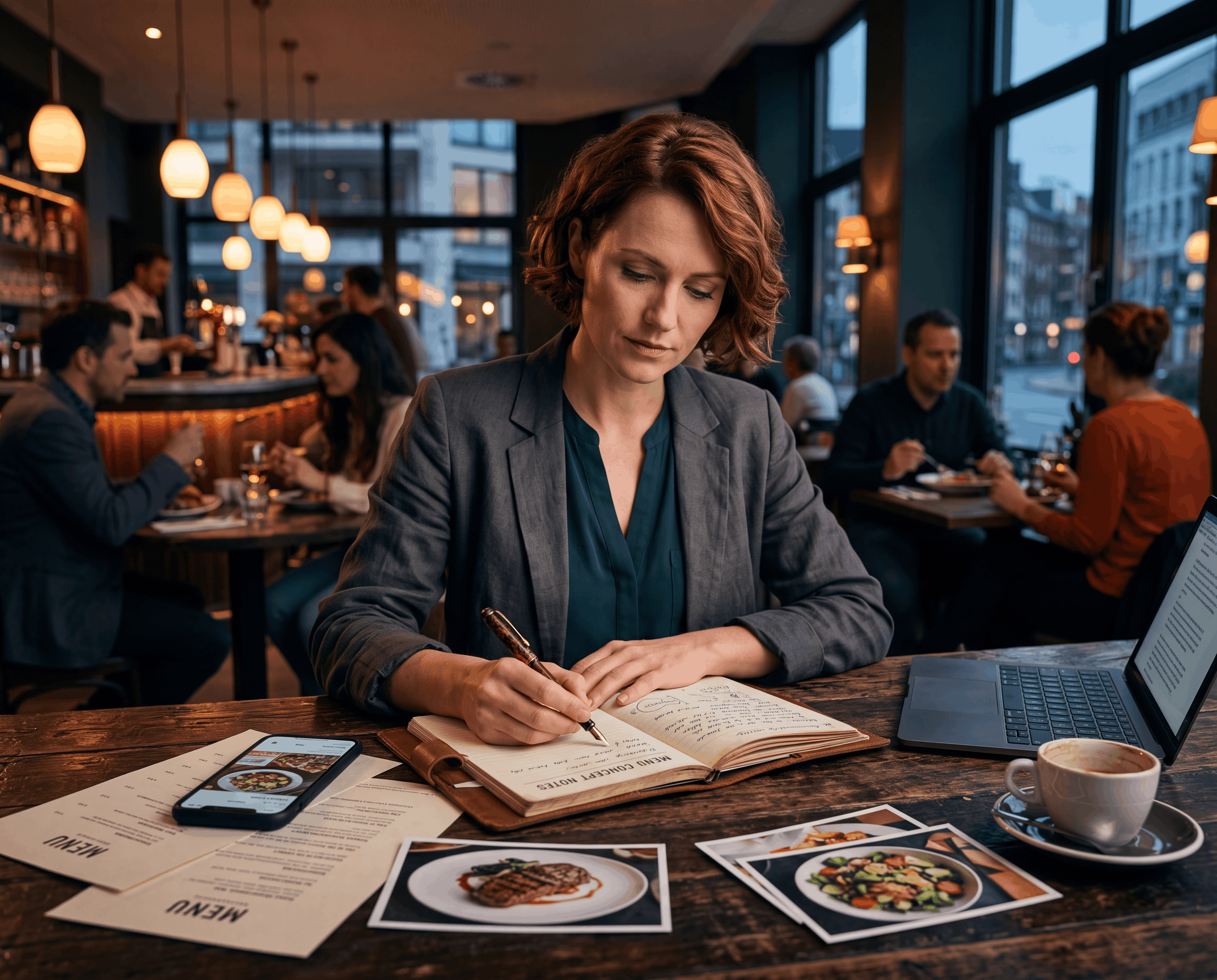
Update your top menu photos first. A handful of strong, current images can do more than a long promotion calendar. Make sure the items you want to sell are the items that look easiest to choose. Avoid relying on outdated dishes, dark photos, or vague descriptions.
Next, tighten the first five menu items a guest sees. Lead with items that travel well, hold margin, and can be repeated by the kitchen without slowing the shift. A delivery marketplace is not the place to bury your best conversion assets halfway down the page.
Then, connect the post-order moment. A guest should be able to scan, search, or click into the next action without guessing. That could be a review request, a direct ordering path, a loyalty signup, a catering inquiry, or a simple social follow. The point is not to overload the guest. The point is to make the next useful action obvious.
Finally, use the delivery signal in your broader marketing. If an item is selling well off-premise, feature it in a Reel, a Google update, an email, or a pickup offer. If a guest question keeps appearing in messages or reviews, turn the answer into content. If a marketplace photo is driving orders, it should not live in only one channel.
How KitchenRush helps
KitchenRush is built for independent restaurants that do not have time to run five separate marketing systems. The platform connects the practical pieces: local visibility, social content, review follow-up, direct ordering paths, guest messages, and owner-friendly publishing.
The value is not "post more." The value is to make each channel reinforce the next one. A delivery profile can support a direct order. A review can support a Google update. A social post can support a menu item. A pickup offer can support a quieter shift. A guest message can become a saved opportunity instead of another inbox loose end.
That is how delivery discovery becomes a regular guest loop.
Quick checklist
- Refresh the photos for the 5 to 10 items you most want browsers to choose.
- Put delivery-friendly, margin-aware items near the top of the profile.
- Make the next action visible after the order: review, direct order, loyalty, or follow.
- Reuse the strongest marketplace proof in social posts and local updates.
- Track which first-time delivery moments become repeat behavior.
FAQs
Should independent restaurants leave delivery apps?
Not necessarily. The smarter move is to treat delivery apps as one part of the guest journey. Use them for discovery while building paths that help guests return through dine-in, pickup, direct ordering, reviews, and loyalty.
What should a restaurant update first on a delivery profile?
Start with menu photos, item order, item names, and short descriptions. These are high-leverage details because guests make quick decisions while browsing.
How can a delivery order become a direct relationship?
Give the guest one clear next step after a good experience. That might be a QR code to reorder directly, a review prompt, a loyalty signup, or a social follow connected to useful offers and updates.
Does this require heavy discounting?
No. The goal is not to bribe every guest back. The goal is to improve clarity, proof, and follow-up so the restaurant earns repeat behavior without training guests to wait for coupons.
Build the first-visit loop
KitchenRush helps independent restaurants turn scattered discovery into a connected growth system. Start with the delivery browser, then build the return path your restaurant can own.
Visual version